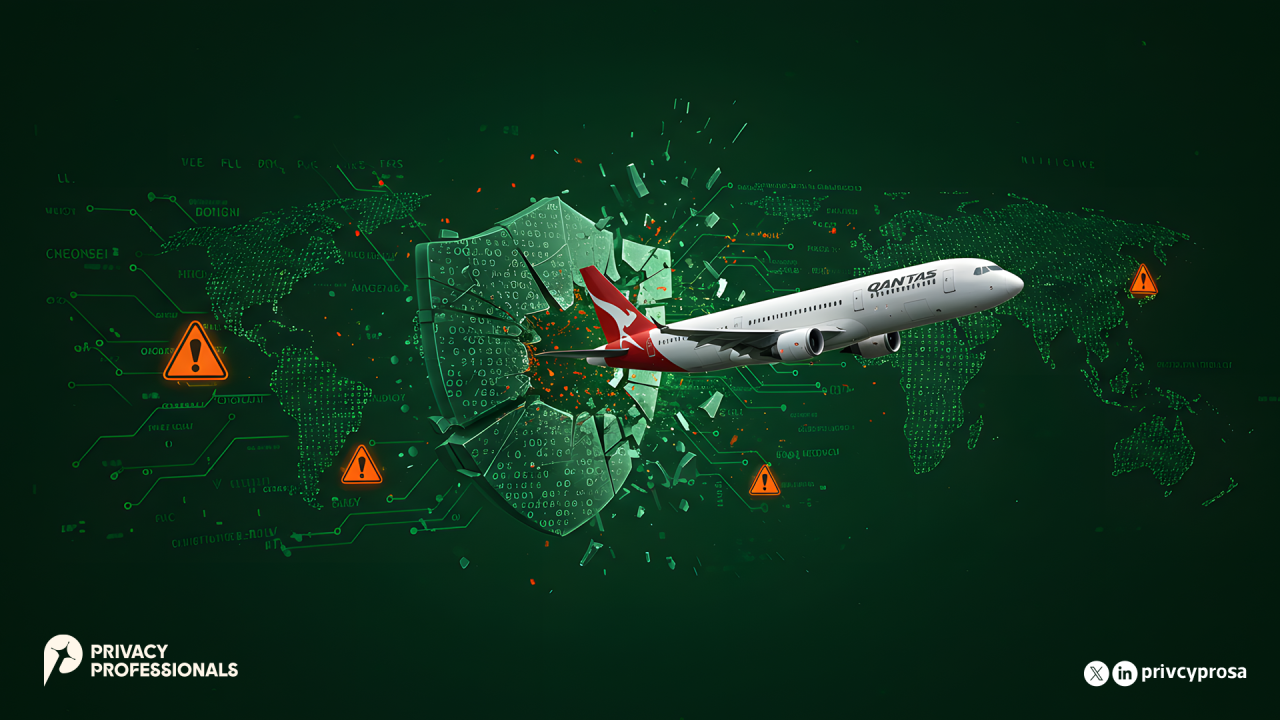
On July 2, 2025, Australian airline Qantas announced that one of its call centers had suffered a major cyberattack, resulting in the leak of personal data belonging to up to six million customers. The incident is considered one of the largest cyberattacks ever witnessed in the Australian aviation sector in recent times.
Incident Details
The incident began when Qantas detected unusual activity on June 30, 2025, on an external platform used in the customer service center. It was later discovered that unauthorized parties had managed to access a large database containing sensitive information. The leak included customer names, email addresses, phone numbers, dates of birth, and frequent flyer membership numbers. The company confirmed that the compromised system did not contain financial data such as credit cards, bank accounts, passports, or passwords, and that none of its core systems or operational processes were affected.
The company’s response and immediate actions
Qantas moved quickly to contain the incident and confirmed that all its other systems remain secure and unaffected, with no impact on flight operations or passenger safety. The company immediately began contacting affected customers to inform them of the incident and provide support and advice on identity protection. Qantas also established a dedicated 24/7 customer support line, provided specialized resources for identity protection, and launched a comprehensive investigation in cooperation with the Australian National Cyber Security Centre, the Office of the Information Commissioner, and the Australian Federal Police.
Statements from management and reactions
Qantas Group CEO Vanessa Hudson expressed her deep apologies to customers, emphasizing that the company understands the level of concern incidents like this cause and that it takes its responsibility to protect customer data very seriously. She indicated that the company is continuing its investigation to determine the exact extent of the stolen data and that it will provide all necessary support to affected customers.
Dimensions and implications of the incident on the sector
This incident highlights the increasing risks associated with the use of external platforms to manage customer data, as the aviation sector has become a frequent target for cyberattacks during 2025, with other companies such as Canada’s WestJet and Hawaiian Airlines experiencing similar attacks in recent weeks. Cybersecurity experts believe that reliance on external service providers increases vulnerabilities and calls for a comprehensive review of data protection strategies in the sector.
The repercussions of the breach were also quickly reflected in the financial markets, as Qantas shares fell by 3.5% in morning trading following the announcement of the incident, a clear indication of the level of concern caused among investors and its direct impact on market confidence in the company.
A broader context: The risks of data breaches in an interconnected world
In a world that increasingly relies on digital data, incidents of personal information leaks have become a threat that goes beyond the boundaries of a single organization. The leakage of millions of users’ data not only affects individuals, but also threatens society’s trust in digital services and impacts the digital economy as a whole. The recurrence of such incidents drives regulatory authorities to tighten legislation and impose higher fines, and forces companies to continuously invest in protection systems and staff training. In this context, the importance of international cooperation and the exchange of information about threats emerges, in order to ensure a safe and stable digital environment.
Multiple Dimensions of the Risks of Personal Data Breaches
Customer data leaks in such incidents have a direct impact on their daily lives, as they become exposed to risks such as financial fraud, identity theft, or blackmail, in addition to the loss of personal privacy. These breaches also cause psychological and social pressures on victims, negatively affect the company’s image and customer trust, and may result in financial losses and legal actions for the affected organizations.
Risks of a Slow Response
Any delay in discovering the incident or notifying customers multiplies the extent of the damage and gives unauthorized parties more time to exploit the data. A slow response means losing control over the crisis, and exacerbates the financial, legal, and social impact on both the company and its customers.
How to Address and Accelerate the Response to Such Incidents
Addressing these incidents requires an integrated response plan that includes:
- Prior Preparation: Establishing a clear response plan and training specialized teams to handle incidents.
- Rapid Detection: Using advanced monitoring technologies to immediately detect any suspicious activity.
- Immediate Containment: Isolating affected systems to prevent the spread of the breach.
- Transparent Communication: Quickly and clearly informing customers and regulatory bodies, while providing the necessary support.
- Investigation and Development: Reviewing the incident and analyzing vulnerabilities to update policies and enhance protection.
Practical Lessons for Enhancing Personal Data Protection
The Qantas data breach incident demonstrates that personal data protection must be an essential part of any organization’s strategy that relies on digital technologies. Key lessons include the importance of developing comprehensive security policies, regularly training employees to handle threats, reviewing reliance on external service providers and ensuring their compliance with security standards. Transparency and prompt communication with customers in the event of any incident, investment in system upgrades, and fostering a culture of security awareness among all members of the organization remain among the most important factors for prevention and ensuring business continuity with confidence and effectiveness.
Conclusion
With the escalation of digital threats and increasing reliance on modern technologies, the responsibility of protecting customer data has become a priority that cannot be delayed for any organization. Traditional measures are no longer sufficient; it is now necessary to develop integrated strategies that combine advanced technology, organizational readiness, and transparency in crisis management. Ultimately, trust remains the true capital, and protecting it requires continuous commitment to updates, learning from experiences, and placing individual privacy at the heart of every decision and action.