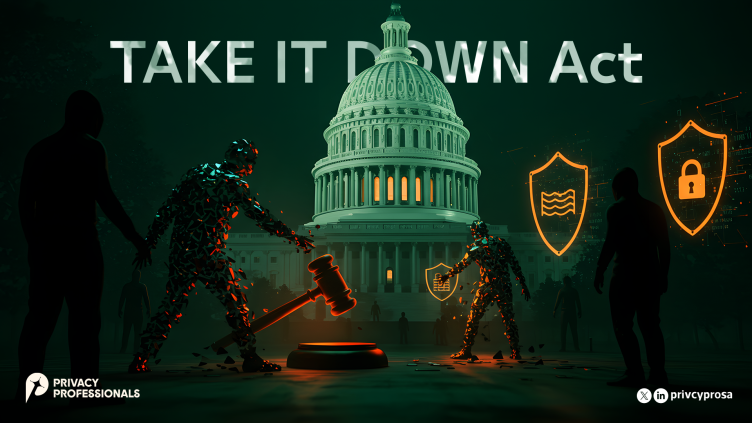
On May 19, 2025, U.S. President Donald Trump signed a new federal law known as the “Take It Down Act,” making it the first legislation of its kind to explicitly criminalize the publication or threat of publishing offensive or inappropriate images or videos without the consent of their owners—whether real or altered using artificial intelligence technologies such as deepfakes.
This law was enacted in response to the increasing incidents of digital privacy violations and online blackmail, especially with the widespread use of modern technologies to fabricate or alter images and videos in ways that harm public morals or reputations.
Motivation and Context: A Legal Gap and a New Digital Weapon
Before this law, U.S. regulations were fragmented at the state level, with some states not clearly criminalizing such acts or imposing only limited penalties. Amidst this disparity, the need emerged for comprehensive federal legislation to address the abusive uses of technology, particularly in the realms of fabrication, manipulation, and digital abuse.
The law received broad political support and was considered a necessary step to keep pace with emerging technological challenges and to provide clear legal protection for victims across all states.
Key Regulatory Provisions
- Criminalizing the publication or threat of publishing offensive or fake images or videos without the owner’s consent, including content altered using artificial intelligence.
- Criminal penalties include imprisonment and fines, in addition to mandatory compensation for victims.
- Requiring online platforms to remove such content within 48 hours of receiving an official report, with additional steps to delete distributed copies.
- Assigning the Federal Trade Commission (FTC) the responsibility for oversight and enforcement, with fines for non-compliant platforms.
- Including threats of publication within the scope of criminalization, even if the act is not carried out.
Impact and Reactions
The law is considered a qualitative shift in regulating the digital space, as it enhances legal protection tools and puts an end to the harmful use of modern technologies against others. However, some concerns were raised about the potential misuse of the complaint mechanism or the restriction of some legitimate content, but most opinions considered these concerns manageable through precise implementation and legal oversight.
The core impact of this legislation is the establishment of a clear principle: using digital tools to harm others, whether through fabrication or unauthorized publication, is no longer exempt from accountability.
The current state in Saudi Arabia: Clear Criminalization and Readiness for Development
In Saudi Arabia, the acts targeted by this type of legislation are already considered crimes under the Anti-Cybercrime Law and the Personal Data Protection Law. The existing regulations criminalize the publication or threat of publishing personal images or videos without permission, whether real or altered, with penalties applied based on the nature and consequences of the act.
Penalties include, but are not limited to:
- Imprisonment for up to one year and a fine not exceeding 500,000 Saudi riyals, or either penalty, in cases of defamation or harm to the victim via electronic means, as stipulated in the Anti-Cybercrime Law.
- Fines of up to five million Saudi riyals for violations of the Personal Data Protection Law, depending on the type and sensitivity of the violation.
- Compensation for psychological or social harm suffered by the victim.
- Increased penalties if the act involves blackmail or the use of fabrication tools.
While these laws provide a strong legal foundation for protecting digital privacy, the flexibility of the regulatory framework in the Kingdom prepares it to keep pace with technological developments, including the challenges posed by artificial intelligence. Enhancing or developing certain legislative aspects in the future is considered natural to ensure that this legal protection remains effective and comprehensive in the face of any upcoming developments.
Final Thoughts
This American legislation reflects a global shift in the understanding and protection of privacy. With the development of artificial intelligence tools, the need for flexible yet decisive legal frameworks is increasing.
In Saudi Arabia, the basic legal tools are available, and addressing this type of crime is one of the most prominent indicators of regulatory maturity in confronting digital violations. With the emergence of new AI-driven risks, maintaining regulatory readiness remains a cornerstone of the national legal system, with the expectation that this readiness will be further enhanced in the future through systematic tools such as Regulatory Impact Assessment. This ensures that any potential legislative development will be based on a precise understanding of the legal, social, and technical impact of new challenges.