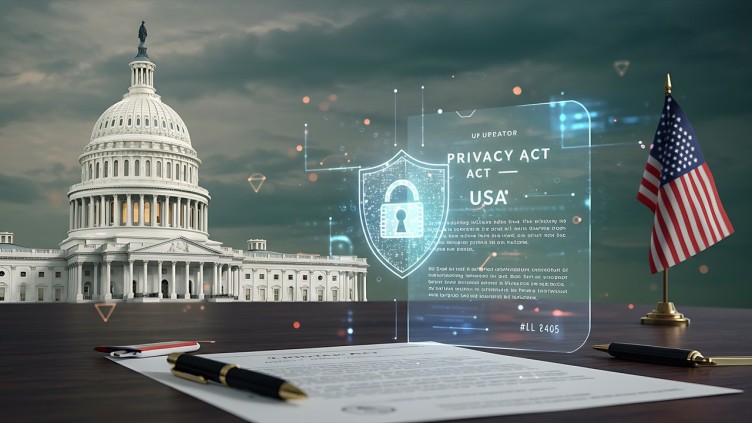
In March 2025, a new bill was introduced in the United States seeking to update the Federal Privacy Act of 1974. This proposed update responds to rapid technological advancements, where the collection and processing of personal data have become increasingly complex and pervasive, exposing significant gaps in existing legal frameworks—particularly in the context of artificial intelligence and big data technologies.
What prompted this update?
Recently, government agencies have encountered increasing challenges after observing the uncontrolled use of personal data across large-scale digital systems. One notable incident exposed the exploitation of legal loopholes to collect and analyze sensitive personal data without sufficient oversight, underscoring the need to renew legal safeguards for privacy protection. These incidents revealed a lack of regulatory oversight, limited judicial authority, and the growing use of data analysis tools in ways that could pose a threat to individual rights.
Key Features of the New Bill:
The proposed bill includes a set of reforms aimed at strengthening privacy protection, including the following:
Stricter Penalties: Imposing significant fines of up to $250,000 and classifying severe violations as federal crimes punishable by imprisonment.
Enhanced Judicial Authority: Granting courts the right to intervene swiftly to halt any unlawful practices involving personal data usage.
Expanded Scope of Protection: Updating the definition of “personal information” to include data linked to devices and digital identities, such as device identifiers and usage patterns.
Regulating Data Sharing: Establishing controls on data exchanges between government entities to ensure transparency and the use of only the minimum necessary information.
Regulation of Analytical Tools: Restricting the use of computational matching technologies that link individuals’ information across various databases without their consent.
Modern Challenges in Privacy Protection
The global digital transformation has introduced unprecedented challenges:
Massive Data Breaches: Recent years have witnessed widespread user data leaks, prompting calls for reassessing protection systems.
AI Usage: The growing reliance on intelligent systems for decision-making based on data has raised ethical and regulatory questions about information control.
Data Collection from Digital Platforms: Some companies exploit online data to target advertisements and influence behavior, often lacking sufficient transparency.
Global Response Efforts: Several countries have adopted advanced frameworks like the General Data Protection Regulation (GDPR), while others are working to update their laws to keep pace with technological advancements.
Summary:
The proposed update to the U.S. Privacy Act of 2025 represents a pivotal step reflecting an increasing awareness of the profound technological changes and their direct impact on individual privacy. With the growing use of data across various sectors, outdated legislation can no longer provide adequate protection, especially in light of advancements in artificial intelligence and complex digital analytics.
The American experience in this context highlights the necessity for legal systems to be more flexible and modern, striking a balance between leveraging data and safeguarding individual rights. This approach also aligns with a global trend toward redefining digital privacy—not merely as a set of rules but as a fundamental principle that enables individuals to trust their surrounding digital environment.
Keeping pace with technological developments, setting clear boundaries for data usage, and enhancing accountability and transparency have become essential steps for ensuring a fair and secure informational ecosystem in the coming era.